- Welcome to Pulse Robot
- +86-23-63207381
- +8613677602178
- sales@pusirobot.com

Single-Motor Integrated Rotary + Linear Motion Solution
Single-Motor Integrated Rotary + Linear Motion Solution
— Smaller footprint, higher precision, lower cost — redefines traditional dual-motor setups.
— Smaller footprint, higher precision, lower cost — redefines traditional dual-motor setups.
Industries: Precision manufacturing, medical devices, 3C electronics, automation equipment
Applications: Inspection, assembly
Key requirements: Compact design, integration, high precision, low cost
Applications: Inspection, assembly
Key requirements: Compact design, integration, high precision, low cost
Industry pain points
Traditional dual-motor designs use separate motors for rotary and linear motion. This leads to bulky builds, double the cost, motion lag, compounded positioning errors, complex tuning, and higher failure rates — all of which limit miniaturization, integration, and high-end performance upgrades.To tackle this common challenge, we introduce our single-motor integrated rotary + linear motion solution. Built around the PMC006 series micro integrated stepper drive controller, it combines a single motor with an inline leadscrew to deliver synchronized rotary and linear motion on one axis. The result: zero synchronization error, drastically reduced size, significantly lower cost, and stable torque output — offering a simpler, more reliable, and cost-effective motion core for high-end equipment.
Equipment overview
This solution uses a coaxial integrated transmission structure that simultaneously converts the motor’s rotary motion into screw rotation and linear travel. No second motor or complex linkages are required, eliminating synchronization issues at the mechanical root.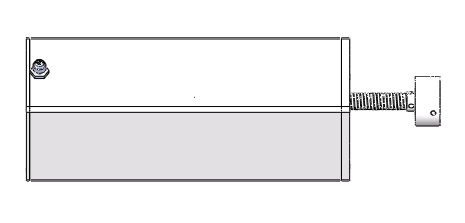
Key advantages
- Single motor replaces two: one drive handles both motions for a minimalist structure
- 100% synchronization between rotation and linear movement: no timing lag, phase mismatch, or control error
- Concentrated torque: all power goes into effective work — stronger thrust, smoother operation
- Up to 60% smaller footprint: radial dimensions match the motor body; axial length only adds travel distance
- Up to 50% cost reduction: one less motor, one less drive, one less control system, half the tuning time
Combined with the PMC006 series micro integrated drive controller, it supports open-loop/closed-loop switching, high-speed torque mode, CANopen, MODBUS RTU, offline programming, and multiple protections — delivering industrial-grade stable control in a compact package.
Solving three critical industry pain points
- Space constraints: equipment keeps shrinking, but motion mechanisms can’t keep up
Traditional dual-motor setups with dual transmissions and guides take up large radial space, making it hard to fit miniaturized, portable, or embedded devices.
Our solution: coaxial integration with no radial expansion — combines rotation and linear motion to fit easily into tight spaces. - Motion lag: poor coordination between two motors limits precision
Rotary and linear motions are driven separately, forcing software delays to force synchronization. This often leads to lag, missed steps, overshoot, and jitter — compromising assembly accuracy, inspection precision, and motion consistency.
Our solution: mechanically linked design means rotation angle and linear travel are strictly proportional — step by step, with zero synchronization error. - High cost and maintenance burden
Two motors, two drives, double wiring, double tuning, double failure points — all adding up in procurement cost, development time, and maintenance expenses.
Our solution: single motor + single drive + single communication line — simpler wiring, easier logic, longer lifespan, and significantly lower overall system cost.
Core performance specifications
- Motion type: simultaneous rotary + linear output
- Drive method: single stepper motor + PMC006 series integrated controller
- Positioning accuracy: up to ≤0.01 mm / ≤0.1° (closed-loop)
- Thrust range: 10N–3000N (depending on leadscrew pitch and motor torque)
- Speed range: up to 5000 RPM (high-speed torque mode)
- Control options: CANopen / MODBUS RTU / offline programming / analog positioning
- Protection: over-temperature, over-current, stall, under-voltage, limit switch, emergency stop
- Compatible motors: 42/57/86 frame stepper motors (direct mount with rear cover)
Moving from dual-motor complexity to single-motor integrated synchronization isn't just a structural simplification — it's an upgrade in precision motion control.
If you're struggling with:
- Not enough space for dual motors
- Rotary and linear motions out of sync, precision falling short
- High costs, complex setups, frequent failures
- Long tuning cycles, inconsistent batch quality